Optimax

Laser Eye Surgery | Laser Eye Treatment | Lasik Eye Surgery > Inside Optimax - Laser Eye Surgery Specialists > Optimax News
Home | Are You Suitable for Laser Eye Surgery? | Laser Eye Surgery & Non-Laser Treatment Costs | Book Your Consultation | Optimax Laser Eye Surgery Clinic Locations | Laser Eye Surgery Explained | Optimax Laser Eye Surgeons | Optimax Laser Eye Surgery Patient Success Stories | Instant Answers | Laser Eye Surgery Laser Comparison | Laser Eye Surgery Clinics Comparison | Optimax Forum | Corporate Laser Eye Surgery Partnership | Laser Eye Surgery Referral Scheme | Laser Eye Surgery FAQs | Contact us | My Optimax

Daily Mail (Hull) - July 2004


Jim’s looking forward to perfect vision

Jo Shaw
 
If you have less than perfect eyesight you’re in good company – about 50 percent of the population is either long or short-sighted. But glasses are easily broken, and not everyone feels comfortable wearing glasses contact lenses. Jo Shaw follows a Hull photographer who picker laser surgery as an alternative.
 
Most people are squeamish at the thought of their eyes being touched.  But even making allowances for this inevitable quease factor, the surgeon’s words are more than enough to bring home the fact that this is no ordinary trip to the opticians.
 
If you thought the sudden jet of air in the eye that comes with the glaucoma test at your regular opticians was bad, try this for size.
 
“With the LASEK procedure, local anaesthetic eye drops are put into the eye” says consultant Ophthalmic surgeon Dr Malcolm Samuel at the Leeds branch of laser eye surgery clinic, Optimax. So far, so pain free.
 
“Then we clamp the eyelid, briefly place some alcohol on the top layer of the cornea, and peel back the top layer of cells. We do the laser treatment to alter the shape of the cornea, then we put the top layer of cells back again.” Simple, no? But there’s more. “You may smell burning, but don’t worry, nothing is burning”. Ouch.
 
If you’ve managed to read this far without your eyes watering, you’re a braver soul than me. But the procedure being described by Dr Samuel is just one of the options available to anyone considering laser eye surgery to correct their vision.
 
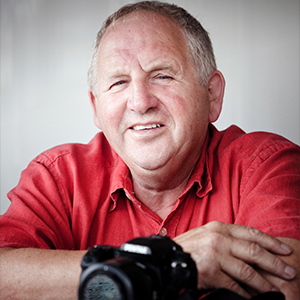
And to the Mail’s very own head of photography, Jim Mitchell, it was an option he hoped would change his life immeasurably for the better. Everyone’s eyesight is precious to them, but as someone who earns a living looking at life through a camera lens, Jim perhaps had more reason than most to want to improve his lot.
 
Having spend the last 25 years if his life in a myopic haze, and with a prescription of minus six, Jim couldn’t even read the front page headline of a newspaper without glasses or contact lenses.
 
He had hoped the consultation at the West Yorkshire Clinic would prove him eligible for the simplest, most popular and relatively pain free version of laser eye surgery available in the UK, called LASIK, and allow him to ditch his unwanted spectacles and contact lenses for good.
 
If you, like Jim, would like to correct your vision with a laser surgery procedure, make sure you do your homework and go into it with your eyes wide open.
 
The success rate for these types of operations is high, but different people have different ideas of success. It’s a good idea to shop around, speak to people who have undergone the same procedure, and make sure you get a full consultation with the surgeon who will be carrying out the operation.
 
It’s important to remember that even though laser eye surgery is usually straightforward, it is a surgical procedure and therefore carries a certain element of risk.
 
When Jim visited the Optimax Clinic, his consultation with the surgeon was preceded with a scan to map out the shape and thickness of his corneas, the outer layer of the eye. He then had a glaucoma test, a general eyesight test to confirm his exact prescription and was asked to complete a health questionnaire.
 
In the consultation, all possible options were explained and Jim was given plenty of time to ask questions. However, after studying Jim’s eye test results, Dr Samuel concluded the cornea in his left eye was very thin, which meant he was not ideally suited to the popular LASIK method of surgery. Dr Samuel explained: “LASIK involves cutting a corneal flap, but we have to leave a certain amount of corneal thickness behind.”
 
However, there was an alternative. A type of surgery known as LASEK can give equally good results, but some people are put off by the fact that the eyes tend to take longer to recover from this procedure.
 
As with any operation, there are risks and at this consultation, Jim was warned about these, should he choose to go ahead. Possible risks associated with LASEK include: Corneal haze, long-sightedness caused by over-compensation, poor night vision, dry eyes, droopy eyelids and the risk of infection.
 
As Jim found out, it’s a case of weighing up the pros and cons before you take the plunge. Dr Samuel said “It’s a surgical treatment and there is a 95 percent chance of success – that means a 95 percent chance of achieving driving standard vision. That’s the target. If we can take someone that level, that is a superb result”.
 
“Of course, that also means that there is a five percent chance your vision will not reach driving standard, but in the worst case scenario, you will still be able to socialise without your glasses, for example”.
 
He told Jim: “Obviously, you were not expecting this situation. You can have LASEK to both eyes, but I would recommend only doing one eye at a time to see how it goes. At minus six, you have a very high prescription, so your expectations need to be real. A lot depends upon your healing process.” He added: “The more you can talk and discuss at the consultation, the less chance there is of you running into a problem afterwards.”
 
Fully armed with all the facts, Jim decided to try LASEK, but took the doctor’s advice and booked just one eye at a time.
 
After undergoing LASEK surgery on his left eye, I caught up with Jim to see how it went. He said “All went well. The operation didn’t hurt but I knew about it with both barrels and knobs on after the anaesthetic wore off!”

”I was nervous, but I was keen to get it over and done with. It was strange, looking up during the procedure and knowing it was tiny pieces of my eye the surgeon was moving about and I was glad the burning smell I’d been warned about was not too bad”.
 
“I left the clinic after the operation with a small armoury of painkillers, antiseptic eye drops, eye cream, eyewash and sleeping tablets in case the pain became too much.”
 
Straight afterwards, Jim was fitted with what is known as a ‘bandage’ contact lens, which helps protect the eye from the elements and keeps the eye moist to assist with the healing process.
 
Four days after that, a return visit to the clinic was required so the ‘bandage’ contact lens could be removed and Jim was told he could expect to see a clear result within a week or two.
 
Looking back on the experience, Jim said: “It was very daunting. There are some risks involved, but it’s a matter of balancing those risks against the benefits of being able to see clearly.
 
“I was worried, but the surgeon and other staff at the clinic were great and put me at ease”.
 
“I’d not experienced that type of discomfort before, but it eased day by day and was virtually nil once the bandage contact lens had been taken out.”
 
“After the operation, you definitely need someone there with you to help you get home. You feel tired and want to wear sunglasses and sit in a dark room.”
 
“I was also advised not to rub the eye, not to go swimming for a month and not to use sun beds for three months.”
 
“I’ve no regrets. Even if my eyesight doesn’t become pin-sharp, it’s a lot, lot better than being a minus six.”
 
Two weeks later, Jim went back to the clinic for a check up and as expected, discovered the eye had gone from being very short-sighted to very slightly long-sighted.
 
He said: “I’m very pleased with this result. It’s fantastic.”
 
“My eyesight is already well within driving standard, and it may improve even more over time.”
 
“It does feel strange, because at the moment, my right eye is very short-sighted and my left eye now has near perfect vision. But I can’t wait to go back to the clinic in a few weeks’ time and have my right eye treated.”
 
“Looking back, the discomfort was only really as bad as a trip to the dentist and it was a very tiny price to pay for the result I’ve got. This is the best thing I’ve done in a long time.
 
To find out more about laser eye surgery procedures, prices and payment methods, call Optimax, which has clinics all over the UK, call 08705 14 33 14 or visit www.optimax.co.uk
 
Choosing the right clinic
Laser Eye Surgery – What type of treatment is available?
The most common type of procedures treat short-sightedness (myopia) when distance vision is blurred, long-sightedness (hyperopia) when near vision is blurred, and astigmatism when everything is blurred.
 
LASIK
The most popular, and least painful of the laser eye surgery procedures, this treats short and long-sightedness and astigmatism by using lasers to reshape the cornea.
 
A thin layer of the cornea (epithelium) about as thick as a human hair is lifted to create a circular hinged flap and the cornea is reshaped. The flap is replaced and the eye usually recovers quickly within a day.
 
LASIK or LASEK
This is a relatively new procedure developed from the old PRK method for people – such as Jim – who are not suitable for LASIK because their corneas are either too thin or flat. An outher layer of the cornea is cut with a much finer scalpel and the epithelium is loosened with alcohol solution. The cornea is reshaped with a laser and the flap replaced. To help the eyes recover ‘bandage’ contact lenses must be worn for three to five days. Good vision is usually achieved in about a week.
 
Implantable Contact Lenses
If a patient is not suited to either of the above procedures, implanted contact lenses may be an option.


Return to Graphics Mode