Was Vincent Van Gogh colour blind?
Why are some people colour blind?
Vincent Van Gogh is without a doubt one of the most famous artists of all time. He is known for his striking colour combinations and beautiful creations, often depicting landscapes, sunflowers or other still life scenes. As iconic as his work is, one of the most commonly-discussed topics when it comes to his career is his choice of colour. It has been suggested by numerous experts in the field that he may be colour blind, as his colours appear more life-like when viewed through a colour blind filter. We’re going to look into how much truth is behind this claim, but not before touching on how colour blindness occurs and how it affects your vision.
Our colour vision depends on two types of light-detecting cells found in our retina, rods and cones. The average person typically has 100 million rods in their retina and around 7 million cones. Your rods are responsible for distinguishing between light and dark but they don’t detect different colours. That job falls to your cones which control your colour vision. They perceive either red, green or blue shades, and all three types of cones need to be working effectively in order for you to have good colour vision. If one cone colour isn’t functioning properly, it results in colour blindness. A person with good colour vision has a small degree of overlapping of their cones, but a person with colour blindness has cones which overlap too much, limiting their perception of colour. This means that you may see the colour differently to the way you should, or get it confused with another shade.
The most common type of colour blindness results in being unable to distinguish between reds and greens, due to either anomalous red or green cones. Colour blindness can also cause you to see colours duller than they actually appear. Some people also suffer from blue-yellow deficiency as a result of anomalous blue cones, although this is much rarer.
What are the different types of colour blindness?
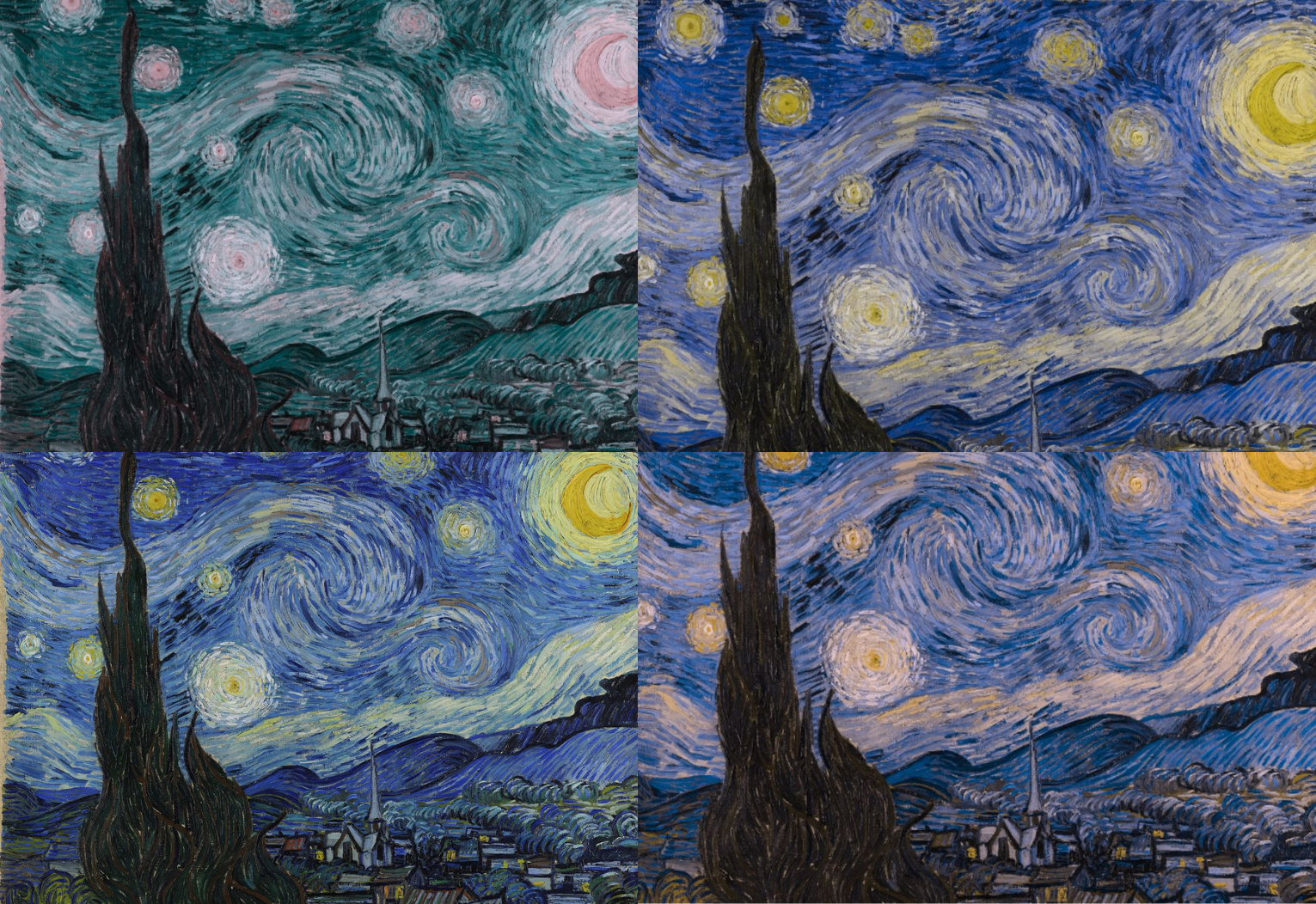
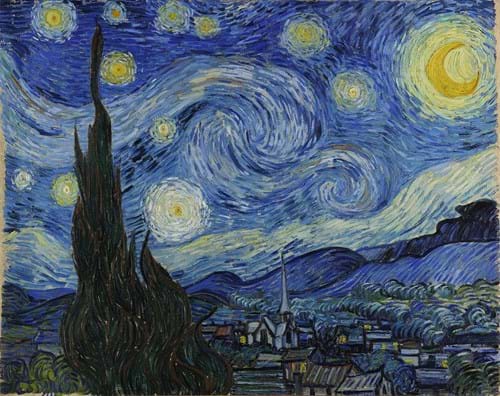
There are actually four different types of colour blindness, each caused by different anomalies within the eye, and each producing a different hue. A person with fully functioning colour vision can expect to see Van Gogh’s famous Starry Night painting in the following shades:
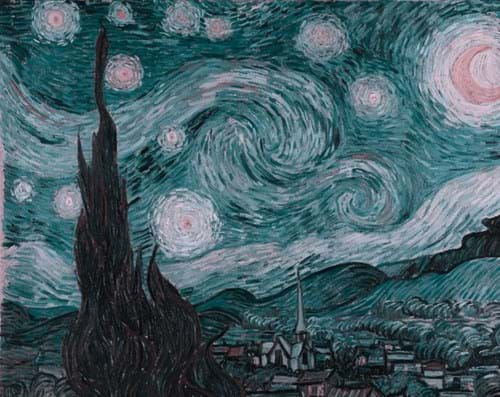
However, it is thought that Van Gogh himself suffered from protanopia, the most common type of colour blindness. Protanopia is a red/green form of colour blindness where the red cones are anomalous. You can see here that, using a protanopia filter, Van Gogh might have viewed his own work like this:
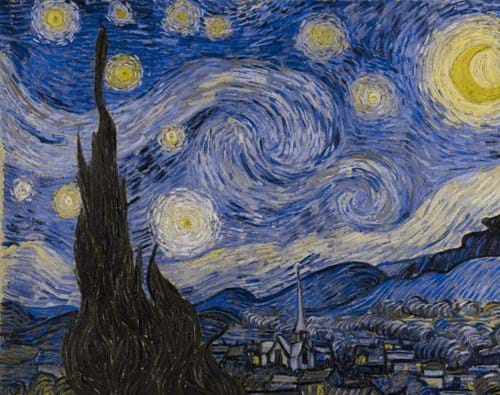
These colours now look a lot closer to real life, suggesting that Van Gogh’s red cones weren’t fully functioning.
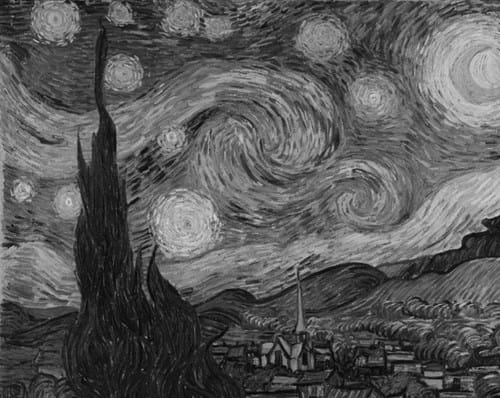
The three other types of colour blindness may have the following views of Van Gogh’s famous Starry Night:
Deutanopia is also a form of red/green colour blindness and occurs when the retina has anomalous green cones.
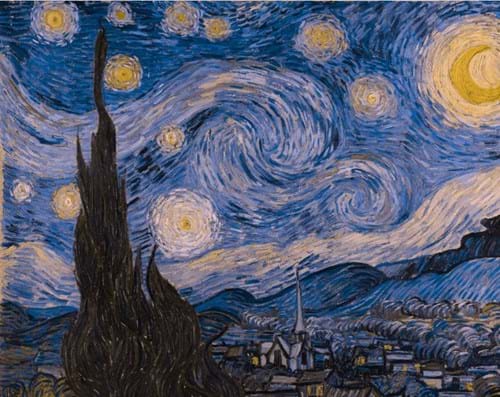
Tritanopia, however, is a blue/yellow form of colour blindness and develops as a result of anomalous blue cones. It can actually be acquired later in life as your eye ages, or if you suffer with certain medical conditions.
The final type of colour blindness is one where you have absolutely no perception of colour at all. It is called achromatopsia and people who suffer with this only see grey, black and white shades. It’s very rare that somebody will be born with achromatopsia, however your colour vision can progressively deteriorate, leading to total achromatopsia.
What other eye conditions might Van Gogh have had?
Aside from his suspected colour blindness, visual experts have also discussed that possibility that Van Gogh had glaucoma. This is because of the halos he often painted around lights, a common characteristic of his work, especially during night scenes. If he truly saw lights this way, it suggests he may have suffered with closed angle glaucoma.
Closed angle glaucoma occurs when the drainage angle in the eye becomes blocked, leading to a sudden, dangerous build-up of pressure inside the eye. Symptoms of closed angle glaucoma include blurry vision, halos when looking at lights, eye pain and nausea. Further details about glaucoma can be read on our blog. If you are suffering from any of the symptoms, along with the most common symptom of loss of peripheral vision, it is important to visit your optician for a thorough examination. Glaucoma can lead to total blindness if left untreated.
Ultimately, we won’t be able to prove whether or not Van Gogh was colour blind. Looking at his works through a protanopia filter certainly presents an interesting case but, as convincing as it might be, it’s not conclusive evidence. Nonetheless, his works can be appreciated in a variety of hues and it does not detract from his legacy.