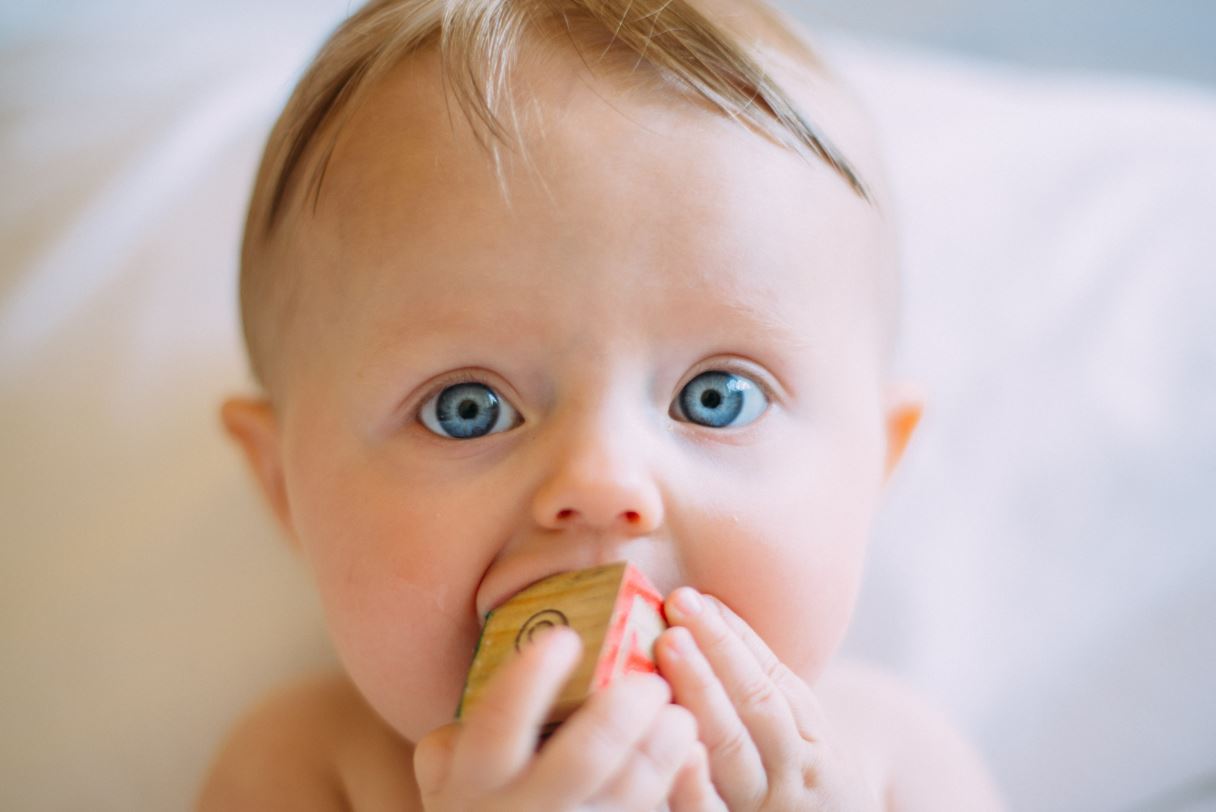
What can babies actually see?
What does your baby see in their first year?
As you look lovingly into your baby’s eyes, have you ever wondered just how much they can actually see? Well, it’s entirely dependent on how old they are, as their vision changes so much over the first few weeks and months of their lives. We’re going to look at (no pun intended!) exactly what babies can see over the first few weeks and months of their lives, as well as discussing ways that you can improve your baby’s vision.
So, what does your baby see…?
In utero
While your baby is still in the womb, they can already detect light and dark. Their eyes begin forming around 4 weeks into gestation and start to perceive light at 16 weeks gestation. However, they don’t actually open their eyes until 26 weeks gestation, although their view inside the womb is obviously pretty limited at this point.
Newborn
When your baby is first born, their vision is blurry but they can see shapes and outlines, along with seeing where light and dark meet. A newborn baby can typically focus between 8-12 inches from their face and they don’t have any colour vision yet. This means the hues of those colourful toys you bought them will likely go unappreciated for the first few months of their life while they live with black, white and grey vision. In the first couple of weeks of your baby’s life, they will also begin to respond to movement and focus on faces.
10-12 weeks
Once your baby can focus on your face, next comes the step of them recognising your face. This is an important moment for all parents and it typically happens around the 10-12 week mark. Your baby’s vision is still blurry at this point but, if you’re close enough, they may recognise you and even raise a smile. At this age, they should also be fixating on objects, particularly enjoying bold monochrome and geometric patterns.
3-4 months
When your baby is 3-4 months old, their eyes will begin to track moving objects. It’s also at this point that they might start to perceive depth and, in doing so, start to reach for moving objects. Their hand-eye coordination may not be good enough yet to accurately aim for the moving object, but the intent is there! Up until around 3-4 months old, you might find that their eyes can look a little cross-eyed, as their eyes are still learning to work together. If the cross-eyes persist after 4 months old, be sure to mention it to your doctor, as it might signal issues with their eye muscles.
4 months
At 4 months old, your baby’s colour vision will begin to develop. Interestingly, babies typically notice red shades first, followed by green. At this point, it’s possible that they will even start to show colour preferences, favouring one hue over another. By the time they are five months old, they will be able to see the full colour spectrum. This is when colourful toys and surroundings will make more of an impact on your baby.
5 months
When your baby is around the 5 month mark, their depth perception will be much improved. Their hand-eye coordination is also a lot more developed at this age. They will start to accurately reach out and touch objects with intent, whether that’s a colourful toy nearby, or even your hair dangling down in front of them.
6 months
When your baby is half a year old and they’re sitting up, and perhaps even starting to eat solids, their vision still isn’t that great! Even though they’ve come a long way from the black and white blurry vision on the day they were born, their vision at 6 months old is still only around 20/100. Good vision is considered to be 20/20, while 20/200 vision counts as legally blind. Your 6 months old baby’s vision falls somewhere in between. Most children do not reach adult levels of visual acuity until the age of 4 or 5.
8-12 months
Your baby’s eyes continue to improve their binocular vision (both eyes working well together) and, by the time they are a year old, they can pick up small toys and objects, as well as feed themselves. Their vision should no longer be blurry and they will also have strong connection between eyes, movement and memory.
When to have your baby’s eyes checked
Your baby will have their eyes examined:
- In the first 3 days of life
- 6-8 weeks old
- 1 year old
- 4-5 years old
The first examination is to ensure that you baby hasn’t been born with cataracts. Around 2-3 in 10,000 babies are both with cataracts, however they can be treated with surgery if necessary. Some visual problems can take time to develop which is why your baby will have another eye test between 6-8 weeks.
You can arrange an eye test for your child at any time if you have concerns about their vision. However, they will receive thorough vision screening once they start school, in order to detect the need for glasses. Testing their vision at this age is much easier as they are able to tell you exactly what they see on the Snellen chart, providing clarity when it comes to their visual needs.