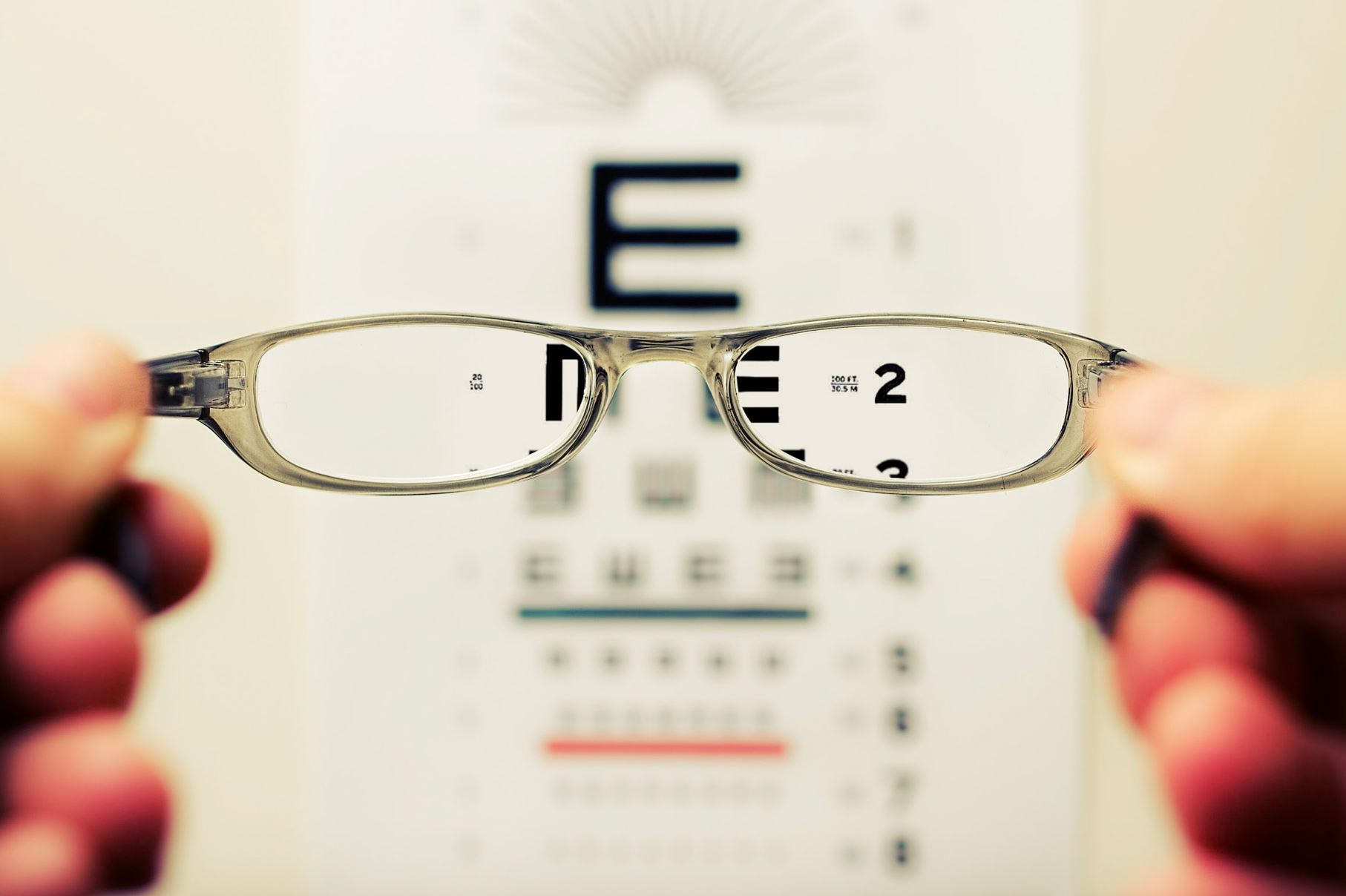
What does 20/20 vision mean and how can you achieve it?
What does 20/20 vision actually mean?
We’ve probably all heard 20/20 vision being mentioned, but do you know what it really means and why it’s called 20/20 vision? This term is what opticians will use to tell you your visual acuity – in other words, how sharp your vision is. First things first, it’s important to note that the ‘20’ refers to 20 feet. You might also have heard it referred to as 6/6 which refers to metres instead of feet. 20/20 tends to be used more in the US, while 6/6 is what we use in the UK. This is the distance from which your optician will check your vision in a sight test to see how well you can read the eye chart.
The first 20 represents the distance in feet at which the test is carried out, and the second 20 represents the distance at which the smallest letters on the eye chart should be visible. 20/20 was determined to be the ideal average for human vision, but only 35% of adults naturally have 20/20 vision or better, with most people living with lower visual acuity.
If you have 20/40 vision, it means that at a distance of 20 feet, you can see the letters on the eye chart which should be visible from 40 feet. 20/40 is the level of vision needed for driving standard vision, so if you have this level of visual acuity, then it’s okay for you to drive without glasses or contact lenses. The larger the second number in the 20/20 set grows, the worse your vision is. For example, someone with 20/60 unaided vision will need glasses or contact lenses in daily life, while a person with 20/200 vision is legally blind. Contrastingly, eagles – known for their incredible vision – have 20/5 vision! The best recorded human vision was 20/8, but it’s incredibly rare to have this level of vision naturally without laser eye surgery or lens treatment.
What is visual acuity?
We mentioned visual acuity briefly, but essentially all it means is how clear and sharp your eyesight is. Your visual acuity is measured very simply – by reading numbers and/or letters on an eye chart. The measurements are always taken from the same distance for everyone, which is a distance of 20 feet or 6 metres. However, it’s rare that you’ll find an opticians’ office long enough to accommodate a 20 feet long space between you and the eye chart. This is why you often find mirrors on walls at your eye test in order to create the illusion of the chart being further away from you.
The eye chart is always in high contrast – usually black text on a white background – to make it easier for you to read the letters or numbers, and to keep it consistent across all eye test providers. Your visual acuity is simply measured by how far down the eye chart you can read, but it doesn’t provide an indication of anything beyond the sharpness of your vision. You may have issues with tracking moving objects, your colour vision, or differentiating between different brightness levels, but none of that can be depicted by a simply visual acuity test.
It’s important to have comprehensive eye tests at least every two years and to see your optician in between if you notice any changes to your vision.
What is a Snellen chart?
Even if you don’t know the name, you’ll definitely have seen a Snellen chart. This is the classic eye test chart, typically with the letter E at the top. The chart was developed by a Dutch ophthalmologist named Herman Snellen back in 1862. It’s now used around the world as a method of assessing visual acuity, providing crucial information for people’s glasses and contact lens prescriptions.
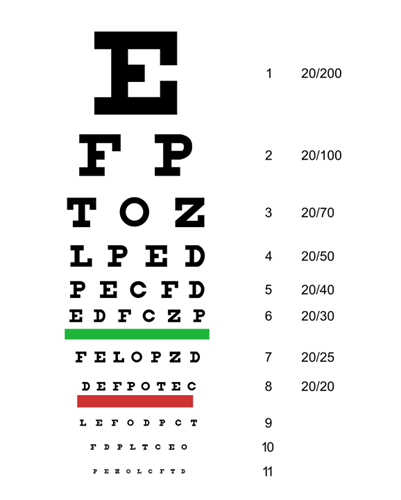
Each line on the chart represents a certain level of vision, starting with 20/200 for the top line. If you can’t read beyond the first line, you are considered legally blind. The fifth line on the chart depicts the driving standard vision level so you need to be able to read this in order to legally drive. This is 20/40 vision and we’re proud to say that over 98% of Optimax patients achieve this standard of vision after their treatment with us.
The bottom line on the chart represents 20/10 vision. Less than 1% of people have 20/10 vision, although most people with young, healthy eyes can identify at least some of the letters on the 20/15 line.
Which conditions can worsen your vision?
There are a number of eye conditions which can affect your vision and cause it to deteriorate. These include, but are not limited to:
- Cataracts – causes dimmed, cloudy vision
- Glaucoma – deterioration of peripheral vision
- Diabetes – floaters and blurred, patchy vision
- Macular degeneration – loss of central vision
- Strabismus and amblyopia – double vision
- Corneal ulcers – blurry, hazy vision
If you are experiencing changes to your vision, it is important that you get an eye test as soon as possible. Generally speaking, the sooner you seek treatment for an eye condition, the greater the chance of preventing any further damage being caused. Prompt treatment even potentially means a greater chance of restoring any lost vision.
Attending regular eye tests allows you to have a point of comparison if you do notice your vision changing over any period of time. You may also need new glasses and contact lenses if your prescription changes, and you’ll also need an up to date prescription in order to visit us at Optimax for eye surgery.
How can you get 20/20 vision?
You can achieve better vision with a number of eye surgery options. At Optimax we offer:
Enter your prescription details into our suitability checker to discover what your most suitable option could be. We’ll be able to confirm this for you in person and our consultations are free in 20 clinics around the UK.
To start your journey to clear, natural vision, give us a call on 0800 093 1110 or book your free consultation online here.